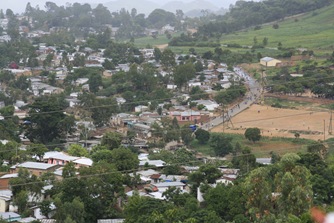
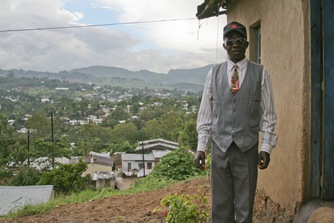
Informal settlements in Malawi have been dictated by the country’s political history. From the 1970’s to 1994, dictator Banda forcefully evicted squatters but also built so-called Service Plots for urban poor. The Service Plots were planned areas with roads, community water points, and pit latrines. After 1994, with the advent of multiparty democracy, informal settlements were allowed to grow as government turned a blind eye, in part to remain popular. The contemporary policy is to recognize and upgrade informal settlements by investing in infrastructure and improving security of tenure.
Lilongwe was planned in 1975 when the government capital moved to the area from Zomba after independence (it has the sprawled, overly planned feeling of Canberra, Australia). In the beginning, the government housing authority was actively planning and creating Service Plots, but ceased completely in the 1980’s. Today, about two thirds of Lilongwe citizens reside in informal settlements. The Malawi government, with a national budget comprised of 40-60% foreign aid, has little money to spend on thorough urban upgrading.

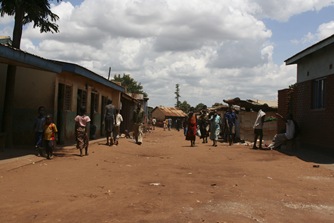


Mtandile informal settlement bicycle repair, streets of the informal settlement, primary school from the government
The informal settlements of Lilongwe are benign compared to those of Nairobi. As population increases, the settlements sprawl unabated into the open fields surrounding the city. While residents have no formal tenure security, there is no risk of government eradication.
There is the beginning of a public-private partnership for waste collection. A group of women is working to collect and sort waste. Organic waste is sold to a company. Bottles and plastics will also be separated and sold.
Land ownership is managed through the traditional chief who keeps his own land register. This has many advantages for residents: children keep land rights after parental death, chiefs control the cemetery and burial rights, and chiefs settle boundary disputes. In Malawi, the local chief has more authority than the government, so much so that the UN uses the chiefs to implement new programs, such as waste collection, rather than the government.